Quick Answer
For a JFK group transfer, the choice between one Sprinter van and two SUVs rarely comes down to seats. A Mercedes Sprinter carries 11 to 14 passengers together in one cabin, while two SUVs carry about the same number of people, split across two cars. The real difference is how the group travels: everyone in one vehicle with the luggage in one place, or divided between two cars that may not pull up together. Groups heading to a single address usually fit the Sprinter better. Groups that split up on arrival are where two SUVs earn their place.
Table of Contents
- Introduction
- How Many Passengers Can a Sprinter Van, or Two SUVs, Really Carry?
- Why the Bags Decide More Than the People
- Riding Together in One Sprinter Van, or Split Across Two SUVs?
- One Sprinter Van or Two SUVs: Which Costs Less?
- When Two SUVs Are the Smarter Choice
- Which Vehicle Fits Your Situation?
- Book Your JFK Group Transfer with JFKShuttles
Introduction
When a group of eight, ten or twelve people lands at JFK, one question comes before everything else: should the transfer be one Sprinter van or two SUVs? It is the starting point of every JFK group transfer, and the answer is less obvious than it looks.
The two options carry nearly the same number of passengers, so seats alone cannot settle it. The decision turns on the luggage the group brings, on whether everyone is traveling to one address, and on how the ride feels after a long flight. This guide goes through those points one by one, using the Sprinter and SUV options JFKShuttles offers at JFK, so the group can pick the vehicle that truly fits it.
How Many Passengers Can a Sprinter Van, or Two SUVs, Really Carry?
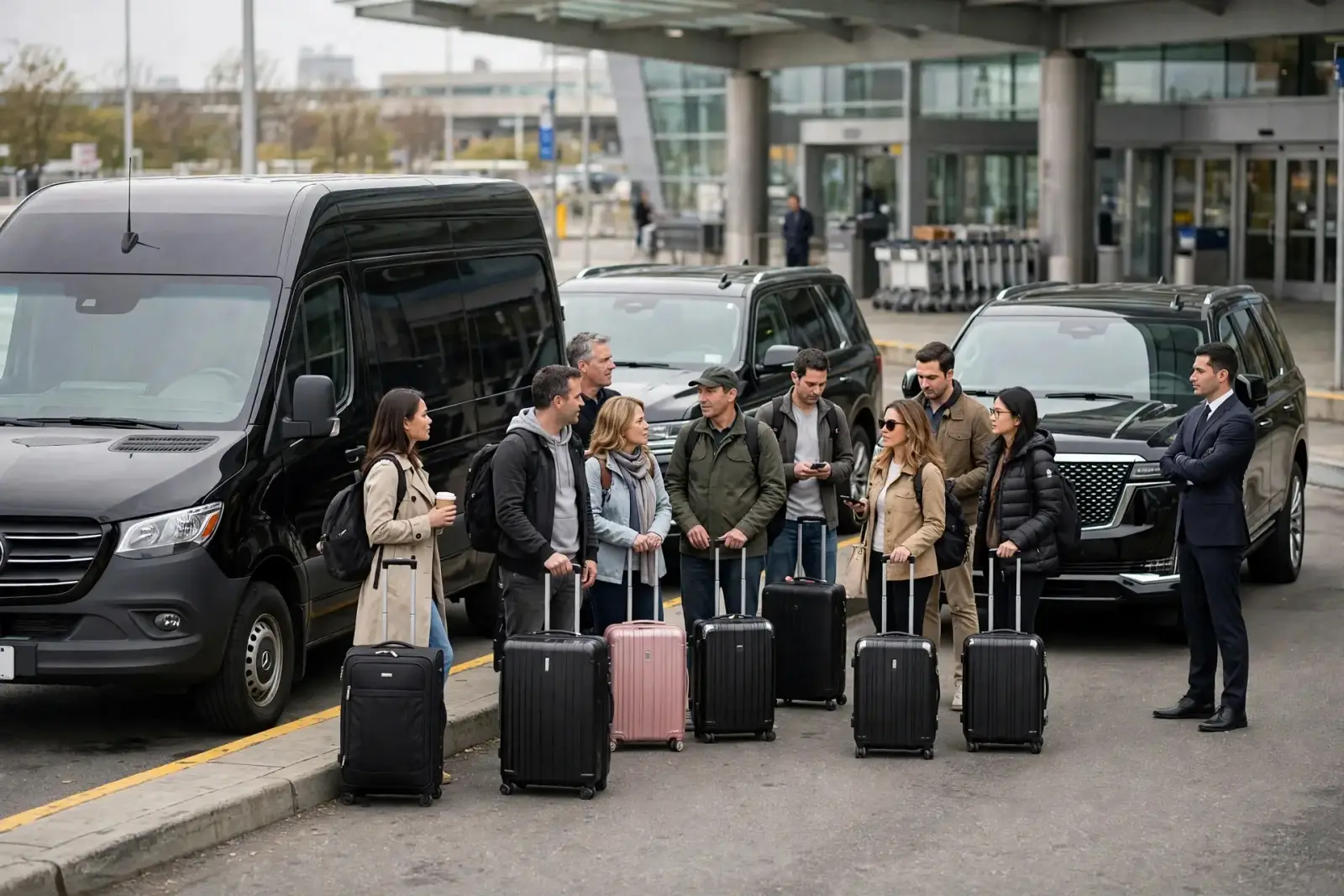
Group bookings seldom match the first number given. A party booked as ten often travels as twelve, once relatives arriving on a second flight are counted and children are included. The vehicle must be chosen for that final figure, not for the early estimate.
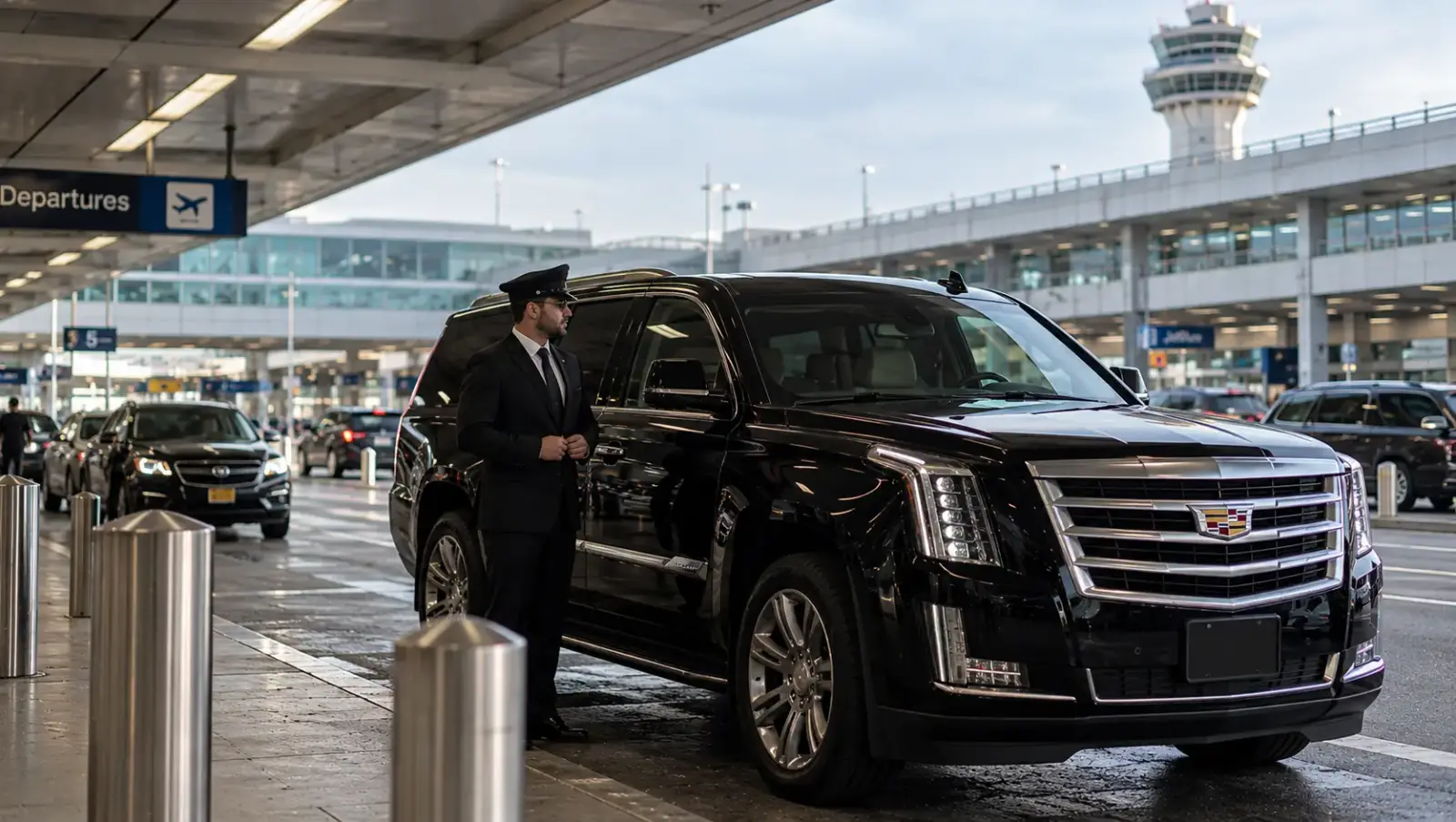
Measured against it, the capacities are straightforward. A Mercedes Sprinter van carries 11 to 14 passengers in a single cabin. A luxury SUV carries 6 to 7, so two SUVs hold 12 to 14 passengers in total, divided between two vehicles.
For a confirmed party of eight to eleven, one Sprinter carries everyone together, while two SUVs would travel part empty. At twelve to fourteen, either arrangement works on seating alone, which is why a sprinter van for 14 passengers at JFK is so often the chosen booking.
Why the Bags Decide More Than the People
Most groups begin by counting people, and that is where the mistake begins. Passengers can be rearranged at the curb; luggage cannot. A suitcase takes exactly the space it takes, in whichever vehicle it rides.
So when a booking goes wrong, it goes wrong on luggage, and by then it is too late to fix. The vehicles are already at the curb; the cases fit or they do not. That is the moment a JFK group transfer is truly decided, and it was decided by the vehicle booked, not by anything that happens at the terminal.
Riding Together in One Sprinter Van, or Split Across Two SUVs?
Everything so far has been about space. This part is about the journey itself. In one Sprinter the group stays a group: the conversation from the terminal continues in one cabin, everyone arrives at the same moment, and heads are counted once, at one door.
Two SUVs divide more than the seating. Each car meets its own traffic, its own lights and its own parking, so one half of the group can reach the hotel or the venue well before the other. For some trips that hardly matters. For a wedding party, a team or a family occasion, arriving together is often the whole point of booking the transfer as a group in the first place.
One Sprinter Van or Two SUVs: Which Costs Less?
- One Sprinter, one rate: the whole group travels under a single flat rate, fixed at booking, and that one figure is all the members divide between themselves.
- Two SUVs, two rates: each SUV is booked and priced on its own: two vehicles, two chauffeurs, two separate rates for the same group.
- The comparison: set side by side, the pair usually totals more than the single Sprinter, so two SUVs are normally chosen for flexibility, not for saving money.
When Two SUVs Are the Smarter Choice
None of the above makes two SUVs a poor choice; it makes them a specific one. They are the right answer whenever the group itself is about to divide:
- Two destinations: part of the group is bound for a Manhattan hotel and the rest for Brooklyn, so each SUV drives straight to its own address instead of one vehicle making two stops.
- Two flight times: half the group lands hours behind the first half, so one SUV leaves with the early arrivals while the second meets the later flight.
- Two plans: some travelers head straight to a meeting or an event while the rest go to the hotel, and separate cars let each half keep its own schedule.
In every case the group was not going to stay together after landing anyway. That, precisely, is what two SUVs are for.
Which Vehicle Fits Your Situation?
Most group bookings come down to one of a few familiar situations. Here is how each one answers:
| Situation | One Sprinter Van | Two SUVs |
|---|---|---|
| 8 to 11 passengers, one address | Everyone and every bag in a single vehicle | Workable, but both cars travel part empty |
| 12 to 14 passengers, ordinary luggage | Cases ride together; no bag ends up in another car | Fits only when the load divides evenly |
| More suitcases than people | One large space built for the full load | One car can fill up while the other has room to spare |
| The group splits to two addresses | One vehicle making two stops | Each car drives straight to its own address |
| Two different flight arrival times | The whole group waits for the later flight | One car leaves early; the other meets the later flight |
| The simplest bill | A single flat rate for the group | Two separate rates to settle |
Book Your JFK Group Transfer with JFKShuttles
By this point the choice usually makes itself: count the passengers honestly, count the large cases, and settle whether the group stays together after landing. Those three answers point to the vehicle.
To book, JFKShuttles needs the passenger count, the number of large bags, the flight details and the drop-off address, and the rate for either arrangement is confirmed before travel. Bookings are taken online and by phone at 📞 (718) 878-1383.